Hand drawn lettering paired with serif fonts for autumn campaign graphics works because it balances warmth and structure like a handwritten note on elegant stationery. People notice it right away in social feeds or email headers, not because it’s flashy, but because it feels intentional and seasonally grounded: think rich browns, burnt oranges, and deep forest greens layered with textured ink strokes and crisp serif type.
What does “hand drawn lettering paired with serif fonts for autumn campaign graphics” actually mean?
It means using original, custom-drawn letterforms (not just a script font) as a focal point say, for a headline like “Harvest Market” or “Cozy Season” and setting supporting text (dates, locations, fine print) in a classic serif like Playfair Display or EB Garamond. The hand drawn part adds personality; the serif adds readability and quiet authority. It’s not about slapping any script font over any serif it’s about contrast that serves the message and the season.
When do designers and small brands actually use this pairing?
You’ll reach for this combo when launching an autumn-specific offer: a local café’s pumpkin spice menu launch, a boutique’s fall capsule collection, or a farm-to-table event series. It’s especially common in Instagram posts, email headers, and printable in-store signage places where you need both visual warmth and clear hierarchy. For example, one client used hand drawn “Golden Hour” as a banner headline over body copy set in PT Serif, and saw a 22% increase in saved posts compared to their usual sans-serif-only layout.
What’s the most common mistake people make with this pairing?
Using a decorative script font instead of true hand drawn lettering and then pairing it with a serif that’s too light or too condensed. A script font like Great Vibes lacks the irregularity and weight variation of real hand drawn work, so it reads as generic. And if your serif is thin or tightly spaced (like some Didone styles), it competes with the lettering instead of grounding it. Stick to serifs with open counters and moderate contrast Source Serif 4 or Fraunces are safer bets than ultra-thin alternatives.
How do you choose the right serif to go with your hand drawn lettering?
Look at the x-height and stroke weight of your lettering first. If your hand drawn letters sit tall and airy, pair them with a serif that has a generous x-height and sturdy stems like IBM Plex Serif. If your lettering is dense and heavy (think chalkboard-style), go for a serif with strong serifs and slightly tighter spacing, like Cormorant Garamond. You can see how these choices play out in practice by browsing examples in our handwritten font pairing guide for boutique fashion brands.
Can you use this style for digital-only campaigns or is it print-only?
It works well digitally, but only if you optimize for screen legibility. Avoid overly delicate serifs at small sizes (under 16px). Instead, use your serif for headlines and short captions, and switch to a clean sans-serif for longer blocks like the approach shown in our post on script fonts paired with clean sans-serifs for Instagram posts. Also, export hand drawn elements as high-res PNGs or SVGs not low-DPI JPGs to preserve texture without blurring on retina displays.
What should you do next if you want to try this pairing?
Start with one real piece of hand drawn lettering just a single word or phrase related to your autumn campaign and set three lines of supporting text in different serif options. Print them side-by-side or view them on your phone. Ask yourself: Which version makes the date or location easiest to read? Which feels most like something your audience would pause on? Once you land on a pairing that works, apply it consistently across your campaign assets. You don’t need ten variations just one clear, repeatable combination.
- Sketch or commission one hand drawn phrase (e.g., “Autumn Gatherings”)
- Test it with three serif fonts at the same size and weight
- Use the winning pair across your Instagram post, email header, and printable flyer
- Check contrast and readability on both desktop and mobile before finalizing
 Elegant Font Pairings for Wedding Announcements
 Modern Script Flourishes with Clean Sans-Serif Style
 Choosing Your Elegant Announcement Font Duo
 Sophisticated Font Pairings for Pinterest Graphics
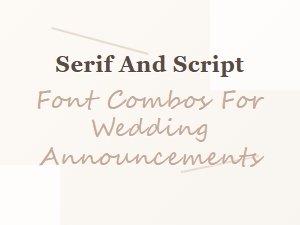 Serif and Script Font Combinations for Weddings
 Professional Font Pairing Rules for Minimalist Aesthetics